

Emotional dysregulation in adults can make a difficult moment feel immediate, consuming, and hard to recover from. Anger may escalate quickly. Anxiety may take over the rest of the day. Shame may linger after a small mistake. Some people act impulsively; others shut down, withdraw, or feel numb. These patterns do not mean someone is weak or “too emotional.” They may signal that the nervous system needs more support, skills, or clinical attention.
Quick answer
Emotional dysregulation describes difficulty influencing the intensity, duration, or expression of emotions in ways that fit the situation and support long-term goals. It is not a diagnosis by itself. Helpful skills may include noticing early body cues, pausing before acting, naming the emotion, checking what the situation requires, choosing a response, and allowing time to recover. Therapy can help identify what drives the pattern and build an individualized plan.
What Is Emotional Dysregulation?
Emotion regulation is the ability to notice, understand, and influence emotional responses. Regulation does not mean eliminating anger, sadness, fear, or excitement. Emotions carry information and can motivate useful action. The goal is flexibility: feeling an emotion without automatically letting it determine what happens next.
Emotional dysregulation in adults may involve emotions that rise rapidly, feel unusually intense, last longer than expected, or lead to actions a person later regrets. It can also appear as difficulty accessing emotion, chronic numbness, or shutting down under pressure.
The term describes a pattern, not a character flaw. It can occur with several mental health conditions, during severe stress, after trauma, alongside sleep or medical problems, or without one obvious explanation. A clinician should consider the full context rather than assuming one diagnosis from a single symptom.
Strong Emotions vs. Emotional Dysregulation
Intense emotion is not automatically unhealthy. Grief, injustice, fear, conflict, and major change can reasonably trigger strong reactions. The more useful questions are whether the response fits the context, whether you retain meaningful choice, how long recovery takes, and what the pattern costs you.
| Area | Strong but regulated emotion | Possible dysregulation pattern |
|---|---|---|
| Intensity | Powerful but understandable in context | Frequently feels overwhelming or disproportionate |
| Choice | Some ability to pause and choose a response | Reaction feels automatic, impulsive, or impossible to interrupt |
| Recovery | Settles with time, support, or problem-solving | Distress lingers, repeatedly returns, or shifts into numbness |
| Impact | Limited lasting disruption | Recurring harm to work, relationships, safety, or self-respect |
Common Signs in Adults
The pattern looks different from person to person. Possible signs include:
- emotions that move from manageable to overwhelming very quickly;
- frequent irritability, anger, panic, shame, or despair;
- difficulty calming down after conflict, criticism, uncertainty, or disappointment;
- impulsive messages, spending, substance use, risky choices, or verbal outbursts;
- withdrawing, freezing, dissociating, or feeling emotionally numb;
- replaying an event and repeatedly reigniting the emotion;
- physical tension, headaches, stomach discomfort, racing thoughts, or disrupted sleep;
- feeling ashamed of reactions and promising yourself it will never happen again.
What Can Contribute to Difficulty Regulating Emotions?
There is rarely one universal cause. A useful assessment looks at when the pattern began, where it occurs, what triggers it, how quickly it resolves, and what else is happening physically and psychologically.
Chronic stress and overload
When demands repeatedly exceed available resources, the nervous system may become more reactive. Sleep loss, caregiving, work strain, financial pressure, discrimination, illness, and relationship conflict can reduce the capacity to pause and respond flexibly.
Past trauma or ongoing threat
Traumatic experiences can shape how quickly the body detects danger and how strongly it responds. Reactions that seem excessive in the present may make more sense when viewed as learned protection. Trauma should be explored carefully, without assuming every intense reaction is trauma-related.
Mental health and neurodevelopmental conditions
Difficulty regulating emotions can accompany anxiety, depression, post-traumatic stress, ADHD, substance-use problems, eating disorders, and some personality or mood disorders. Similar outward behavior can arise from different mechanisms, so self-diagnosis from a checklist may point someone in the wrong direction.
Physical and biological factors
Sleep disorders, hormonal changes, pain, medication effects, substance use, neurological conditions, and other medical issues may influence mood or impulse control. New, severe, or unusual changes deserve medical evaluation.
Learned patterns and limited support
Some adults grew up in environments where emotions were punished, ignored, or expressed unpredictably. They may not have had opportunities to learn language for feelings, repair conflict, or practice coping with support.
The Emotional Escalation Cycle
Understanding the sequence creates more places to intervene. A typical cycle may include:
- Trigger: criticism, uncertainty, rejection, sensory overload, a painful memory, or accumulated stress.
- Interpretation: “I am not safe,” “I am failing,” “They do not care,” or another rapid meaning.
- Body activation: racing heart, muscle tension, heat, nausea, shallow breathing, or numbness.
- Action urge: attack, escape, seek reassurance, shut down, use a substance, or make an impulsive decision.
- Behavior and consequence: the response may provide immediate relief but create conflict, regret, avoidance, or shame.
The earlier you recognize the cycle, the more options you usually have. The goal is not perfect control. It is creating enough space to choose the next helpful action.
How Emotional Dysregulation Can Affect Relationships
Emotional dysregulation in adults often becomes most visible in close relationships because attachment, trust, rejection, and vulnerability carry high emotional stakes. A delayed reply may feel like abandonment. A request may sound like criticism. A disagreement may quickly become a threat to the entire relationship.
One partner may pursue reassurance while the other withdraws, creating a cycle that intensifies both reactions. Repeated escalation can make people focus on defending themselves instead of understanding the original concern. Afterward, guilt and fear of another conflict may prevent meaningful repair.
Helpful relationship practices include agreeing on a pause-and-return plan, using specific descriptions instead of global accusations, addressing one problem at a time, and discussing sensitive issues before either person reaches peak activation. A pause should include a clear return time so it does not become silent treatment.
Emotional Regulation at Work
At work, emotional dysregulation in adults may appear as panic after feedback, difficulty shifting between tasks, avoidance of uncomfortable conversations, impulsive emails, perfectionism, or exhaustion after masking distress throughout the day. The person may perform well while using enormous energy to appear calm.
A practical workplace plan might include delaying responses to nonurgent feedback, preparing for predictable triggers, taking short regulation breaks, clarifying expectations in writing, and separating a performance issue from conclusions about personal worth. When appropriate, a clinician may help a person consider whether formal workplace accommodations should be explored through the proper process.
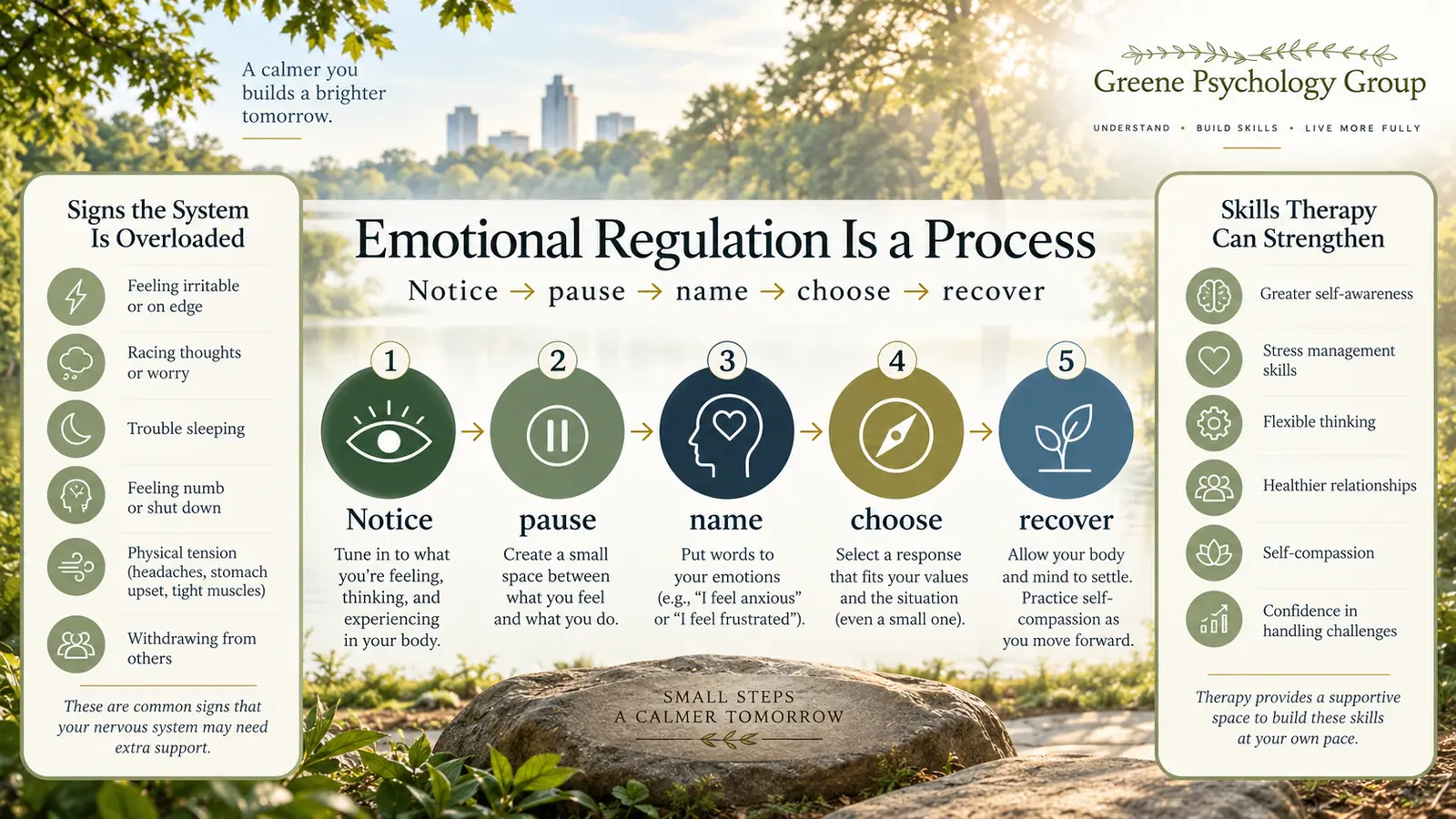
A Five-Step Emotional Regulation Process
1. Notice
Look for early signals: a tight jaw, hot face, narrowed attention, urge to leave, faster speech, or a familiar thought. Catching a level-four reaction is easier than stopping it at level nine.
2. Pause
Create a small gap before acting. Put down the phone, ask for ten minutes, place both feet on the floor, or take a slower exhale. A pause is not avoidance when you return to the issue at an agreed time.
3. Name
Use specific language: disappointed, threatened, embarrassed, lonely, overstimulated, or powerless. You can also name intensity from zero to ten. Precision helps separate the feeling from the action urge.
4. Choose
Ask what response fits both your values and the facts. You might clarify what someone meant, state a boundary, delay a decision, solve a practical problem, or accept a feeling that cannot immediately be changed.
5. Recover
The body may need time to settle after the situation ends. Gentle movement, hydration, rest, connection, or a grounding activity can support recovery. If harm occurred, repair may include acknowledging the impact, apologizing without excuses, and changing the future plan.
Skills for Intense Moments
Different situations call for different tools. Practice when relatively calm so the skills are easier to access under pressure.
- Orient to the present: identify five things you see, four you feel, and three you hear.
- Lengthen the exhale: breathe comfortably and let the exhale last slightly longer than the inhale. Stop if breathing exercises increase distress.
- Reduce stimulation: step into a quieter space, dim bright light, or pause competing inputs when possible.
- Delay irreversible actions: do not send the message, quit, spend, drive, or confront someone until activation decreases.
- Check the facts: separate what you know from what you fear, predict, or assume.
- Use a coping statement: “This is intense, and I can choose the next step.”
- Seek co-regulation: contact a trusted person who can remain calm, listen, and help you slow down.
A useful pause script
“I want to handle this well, and I am too activated to continue productively. I need 20 minutes. I will come back at 7:30 so we can finish the conversation.”
Longer-Term Habits That Support Regulation
In-the-moment skills matter, but baseline conditions influence how much capacity is available. Consistent sleep, regular meals, movement, medical care, manageable substance use, and supportive relationships can make emotional regulation easier. These habits are not cures, and they should not be used to blame someone whose symptoms persist.
Track patterns for two weeks: the trigger, emotion, intensity, body sensations, action, consequence, and what helped. The goal is observation, not self-criticism. Patterns can reveal vulnerable times, recurring interpretations, or needs that have gone unaddressed.
Common Misunderstandings
“Regulation means staying calm all the time.”
Healthy regulation includes using anger to set a boundary, allowing grief, expressing excitement, and asking for help. The aim is not permanent calm. It is responding with enough awareness and flexibility to protect what matters.
“Intense reactions are attention-seeking.”
Outward behavior can affect others and still reflect genuine distress. Accountability and compassion can exist together. Understanding emotional dysregulation in adults does not excuse harmful behavior; it helps identify what must change.
“One coping skill should work every time.”
A grounding exercise may help with anxiety but not solve an unsafe situation, unmet need, medication reaction, or ongoing conflict. Effective regulation involves matching the response to the function of the emotion and the reality of the situation.
“A label explains the whole person.”
The same behavior can have multiple explanations. Careful assessment looks at development, culture, relationships, health, sleep, substances, trauma exposure, symptoms, strengths, and environmental stressors. A social-media label cannot do that work.
How Therapy Can Help
Emotional regulation therapy is not one single method. A therapist may draw from cognitive behavioral therapy, dialectical behavior therapy skills, acceptance-based approaches, mindfulness, trauma-informed care, or other evidence-based strategies according to the person’s needs.
Therapy may help you map triggers and consequences, examine interpretations, tolerate distress without making the situation worse, communicate needs, repair relationships, and build a wider range of responses. It may also identify when medical evaluation, medication consultation, substance-use care, or a higher level of support should be considered.
Progress does not mean never becoming upset. More realistic signs include noticing earlier, recovering faster, reducing harmful behavior, communicating more clearly, and making choices that fit your values even when feelings are intense.
What to Expect in an Assessment
An assessment for emotional dysregulation in adults may explore when the pattern began, common triggers, intensity, recovery time, impulsive or avoidant behaviors, relationship impact, sleep, substances, medication, medical history, trauma, and family history. The clinician may ask about periods of unusually elevated energy, depression, anxiety, attention difficulties, self-harm, or dissociation to understand possible contributing conditions.
Bring examples rather than trying to choose the correct diagnosis. A short record of triggers and responses can be useful. Honest discussion of substance use, safety concerns, medication changes, and major shifts in sleep or energy helps the clinician recommend appropriate next steps.
Treatment planning should be collaborative. Ask how the therapist understands the pattern, what approaches they recommend, how progress will be measured, and what would lead them to coordinate with another healthcare professional.
When to Seek Professional Support
Consider speaking with a qualified professional when emotional reactions repeatedly affect work, school, relationships, parenting, sleep, physical health, or safety. Support may also be useful if you frequently feel out of control, rely on substances to cope, experience major shifts in mood or energy, or cannot recover with strategies that previously worked.
Seek prompt medical attention for sudden or severe personality or mood changes, confusion, symptoms following a head injury, or reactions that may relate to medication or substance use.
Urgent support: If you may harm yourself or another person, cannot stay safe, or face an immediate emergency, call 911 or go to the nearest emergency department. In the United States, call or text 988 for the Suicide & Crisis Lifeline.
Emotional Regulation Therapy in Raleigh, NC
Greene Psychology Group supports adults experiencing anxiety, stress, trauma-related concerns, relationship difficulties, and other patterns that may affect emotional regulation. Care begins with understanding your history, current challenges, goals, and preferences—not forcing every person into the same explanation.
Learn about mental health therapy, explore stress management support, or review online therapy options.
Build skills for intense emotions
Contact Greene Psychology Group to ask about current availability and therapy options.
Contact Us Call 919-205-5339Frequently Asked Questions
1. Is emotional dysregulation a diagnosis?
No. It is a descriptive term for difficulty regulating emotional responses. It can occur in several conditions or during periods of significant stress, and only a qualified professional can assess the underlying factors.
2. What does emotional dysregulation look like in adults?
It may involve rapid escalation, prolonged anger or anxiety, impulsive actions, shutdown, numbness, difficulty recovering after conflict, or reactions that repeatedly interfere with daily life.
3. What causes emotional dysregulation in adults?
Possible contributors include chronic stress, trauma, learned coping patterns, sleep loss, medical factors, substance use, and mental health or neurodevelopmental conditions. The cause varies and requires individualized assessment.
4. Is emotional dysregulation the same as anger problems?
No. Anger may be one expression, but dysregulation can also involve anxiety, shame, sadness, excitement, numbness, avoidance, or shutdown.
5. Can ADHD affect emotional regulation?
Some adults with ADHD report impulsivity, frustration intolerance, and difficulty shifting away from intense emotions. These experiences are not unique to ADHD, so a complete evaluation matters.
6. Can trauma cause intense emotional reactions?
Trauma may shape threat detection, body activation, avoidance, and recovery. Not every intense reaction is trauma-related, and trauma-informed assessment should avoid assumptions.
7. What can I do when emotions feel overwhelming?
Pause irreversible actions, reduce stimulation, notice body cues, name the emotion, orient to the present, and contact a safe person. Use emergency or crisis services when safety is at risk.
8. How does therapy improve emotional regulation?
Therapy can help identify triggers, examine interpretations, tolerate distress, change unhelpful behavior, communicate needs, and practice responses that better fit a person’s goals.
9. How long does emotional regulation therapy take?
There is no universal timeline. Duration depends on the causes, severity, goals, treatment approach, practice between sessions, outside stressors, and whether other conditions require care.
10. Can online therapy help with emotional dysregulation?
Online therapy may be appropriate for many non-emergency concerns when privacy, technology, location, and clinical needs support it. A provider can help determine whether online or in-person care is a better fit.
Sources and Further Reading
- APA Dictionary of Psychology: Emotion Regulation
- National Institute of Mental Health: Caring for Your Mental Health
- American Psychological Association: ADHD and Emotion Dysregulation
- SAMHSA: Frequently Asked Questions About 988
This article is for educational purposes only and is not a substitute for diagnosis, treatment, or individualized advice from a qualified healthcare professional.