
Seasonal depression North Carolina guidance matters because this condition can be easy to overlook in a state known for relatively mild winters. Shorter daylight hours, changing routines, holiday stress, reduced outdoor activity, and an individual vulnerability to seasonal mood changes can still affect mental health.
Seasonal affective disorder, often shortened to SAD, is a form of depression with a recurring seasonal pattern. Most people who experience it notice symptoms beginning in fall or winter and improving in spring, although a less common summer pattern is possible. The important distinction is not the weather alone. It is whether depressive symptoms return during a particular season, interfere with daily life, and follow a recognizable pattern over time.
Quick answer
Seasonal depression North Carolina residents experience is possible despite the state's milder climate. A warmer climate does not eliminate seasonal changes in daylight, routine, sleep, activity, or stress. Clinicians look at the timing, recurrence, severity, and functional impact of depressive symptoms rather than latitude alone. If low mood, loss of interest, fatigue, sleep changes, or withdrawal repeatedly appear during the same season, a professional assessment can help clarify what is happening.
What Is Seasonal Depression?
Seasonal affective disorder is depression that follows a recurring seasonal pattern. It is not a separate mood disorder from depression. Clinically, it is understood as major depressive disorder or bipolar disorder with a seasonal pattern when the applicable diagnostic criteria are met.
Winter-pattern SAD is more common. Symptoms typically begin during fall or winter and improve during spring or summer. Summer-pattern SAD is less common and follows the opposite timing. A few low-energy days during rainy or cold weather do not automatically indicate SAD. The pattern involves clinically meaningful depressive symptoms and impairment.
The word “seasonal” can sometimes lead people to minimize the condition as temporary winter blues. Seasonal depression can be serious. It may affect work, school, relationships, physical health, self-care, and safety. Its predictable timing does not make the symptoms less real or less deserving of support.
Can Seasonal Depression Happen in North Carolina?
Yes. North Carolina still experiences meaningful changes in daylight across the year. Winter days are shorter, mornings and evenings are darker, and people may spend less time outside. Work schedules can mean leaving home before sunrise or returning after sunset even when daytime temperatures remain moderate.
Seasonal mood changes are also influenced by more than temperature. Holiday expectations, grief anniversaries, financial pressure, school calendars, changes in exercise, reduced social contact, travel, illness, and disrupted sleep can cluster during particular parts of the year.
North Carolina’s varied geography can shape the experience. Winter daylight patterns are shared statewide, while weather and daily routines may differ between the mountains, Piedmont communities such as Raleigh, and coastal areas. Location is one part of the picture, not a diagnostic test. Understanding seasonal depression North Carolina patterns requires looking at the individual’s repeated symptoms and their effect on functioning.
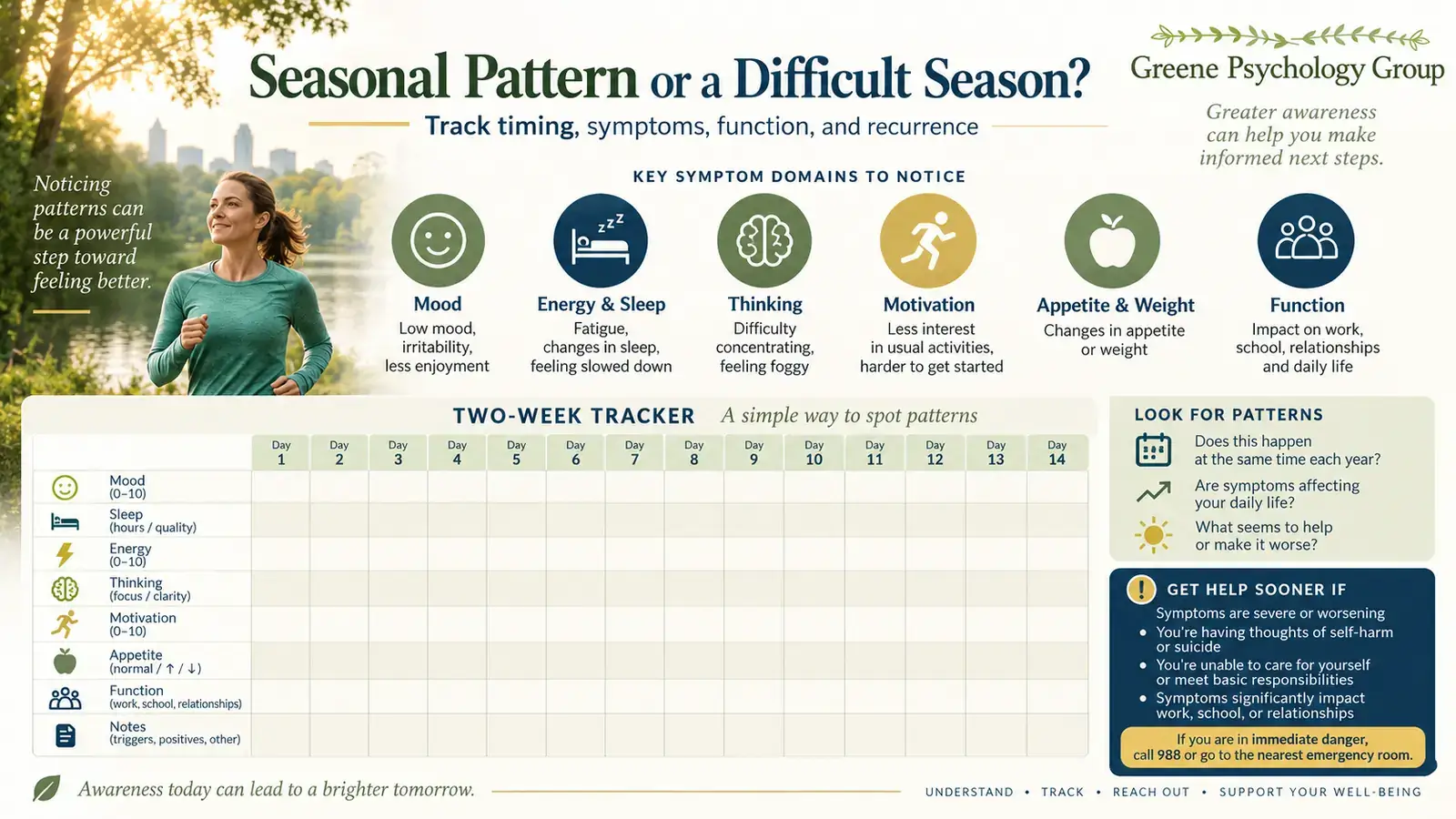
Seasonal Pattern or a Difficult Season?
A difficult winter and seasonal depression can overlap, but they are not identical. Clinicians consider whether symptoms resemble a depressive episode, whether they return during a similar season, whether they improve during another part of the year, and whether nonseasonal episodes or other explanations are present.
| Pattern | What you may notice | What to consider |
|---|---|---|
| Temporary winter blues | Brief lower energy or mood without major impairment | Symptoms often respond to routine, rest, connection, and activity |
| Seasonal stress | Distress linked to holidays, workload, grief, finances, or family conflict | The trigger may recur yearly without meeting criteria for a depressive episode |
| Possible seasonal depression | A cluster of depressive symptoms that returns in a particular season and disrupts functioning | Assessment should examine recurrence, remission, severity, safety, and other causes |
| Nonseasonal depression | Symptoms occur throughout the year or do not consistently follow a season | Treatment is still important even when timing is not seasonal |
Common Signs and Symptoms
Seasonal depression includes symptoms associated with depression. The exact combination varies, and not everyone experiences every symptom. Possible signs include:
- persistent sadness, emptiness, irritability, or emotional numbness;
- loss of interest or pleasure in activities that usually matter;
- low energy, fatigue, or feeling slowed down;
- difficulty concentrating, remembering, or making decisions;
- changes in sleep, appetite, or weight;
- withdrawal from friends, family, work, or usual routines;
- feelings of guilt, worthlessness, hopelessness, or helplessness;
- thoughts of death, self-harm, or suicide.
Winter-pattern SAD may be associated with oversleeping, increased appetite or carbohydrate cravings, weight gain, and social withdrawal. Summer-pattern SAD may involve insomnia, reduced appetite, weight loss, restlessness, or agitation. These tendencies are not rules, and diagnosis should not be based on one symptom.
What Causes Seasonal Depression?
There is no single cause. Research examines how seasonal changes in daylight may affect biological rhythms, sleep-wake timing, and systems involved in mood regulation. Individual biology, family history, environment, and life circumstances may all contribute.
A person may have a higher likelihood of SAD if they have a personal or family history of depression or bipolar disorder. Geography may influence exposure to seasonal daylight changes, but living in a warmer or more southern state does not provide complete protection.
Risk factors describe probability, not destiny. They also cannot confirm why one person feels depressed. A complete evaluation matters because similar symptoms may have different causes and require different care.
What Can Look Like Seasonal Depression?
Several concerns can create a pattern that appears seasonal. Holiday conflict, bereavement anniversaries, academic calendars, changes in employment, financial cycles, chronic pain, medication effects, substance use, sleep disorders, and medical conditions may affect mood and energy at predictable times.
Depressive symptoms can also occur as part of bipolar disorder. A history of periods involving unusually elevated or irritable mood, reduced need for sleep, racing thoughts, impulsive behavior, or increased activity is important to discuss with a qualified clinician. That history can influence treatment decisions.
A mental health professional may recommend coordination with a primary care provider when symptoms, medications, sleep concerns, or physical changes suggest a possible medical contribution. The goal is not to dismiss emotional distress as “just physical.” It is to avoid overlooking a treatable factor.
How Seasonal Depression Is Evaluated
There is no single blood test, quiz, or weather threshold that diagnoses seasonal depression. An evaluation typically explores:
- which symptoms are present and how long they last;
- when they begin and improve during the year;
- whether the pattern has occurred during previous years;
- how mood changes affect work, school, relationships, health, and self-care;
- whether depressive episodes occur outside the suspected season;
- past elevated, energized, or unusually irritable mood states;
- medical conditions, medications, substances, sleep, and major life stressors; and
- current safety, protective factors, and available support.
Screening questionnaires and mood records may help organize information, but they do not replace a clinical assessment. A responsible evaluation remains open to more than one explanation and considers the person’s full history rather than a single season.
A 14-Day Seasonal Mood Tracking Plan
A brief record can provide useful details for a therapy or medical appointment. Once daily for two weeks, note:
- Mood and interest: Rate low mood and loss of interest from 0 to 10.
- Sleep: Record bedtime, wake time, awakenings, naps, and whether sleep felt restorative.
- Energy and concentration: Note when each was strongest and weakest.
- Daylight and movement: Estimate outdoor time, physical activity, and the time of day.
- Connection: Record meaningful social contact and any urge to withdraw.
- Functioning: Note what happened with work, school, caregiving, meals, hygiene, and household tasks.
- Context: Add unusual stress, illness, travel, substance use, medication changes, or menstrual and hormonal factors when relevant.
- Safety: Record hopelessness or thoughts of self-harm and seek immediate help when safety is uncertain.
Do not wait for fourteen days if symptoms are severe, safety is a concern, or daily functioning is rapidly worsening. Tracking is meant to improve a clinical conversation, not delay care or create a self-diagnosis.
Treatment Options for Seasonal Depression
Treatment depends on the diagnosis, symptom severity, medical history, preferences, safety needs, and whether other conditions are present. Options may be used alone or together under appropriate professional guidance.
Psychotherapy
Psychotherapy can help address withdrawal, reduced activity, negative predictions, disrupted routines, stress, and the personal meaning attached to a season. Cognitive behavioral therapy adapted for SAD may include behavioral activation and work with unhelpful seasonal thoughts. Therapy can also address grief, relationships, work pressure, perfectionism, anxiety, or other concerns that intensify the pattern.
Light therapy
Light therapy is an established treatment option for winter-pattern SAD. It involves planned exposure to a light box designed for therapeutic use. The correct device, brightness, distance, timing, and duration matter. More light is not automatically better.
Light therapy safety: Speak with a qualified healthcare professional before starting, especially if you have bipolar disorder or possible manic symptoms, an eye condition, or take medication that increases light sensitivity. Report agitation, major sleep changes, eye discomfort, headaches, or unusual mood elevation.
Medication
A qualified prescriber may discuss antidepressant medication for some people. Decisions depend on symptoms, history, other medications, side effects, bipolar risk, pregnancy considerations, and previous response. Do not start, stop, or change a medication based on an article.
Coordinated care and prevention planning
When a seasonal pattern is established, planning before the usual onset may be useful. A clinician can help identify early warning signs, decide which routines or treatments should begin in advance, and create a plan for monitoring response. Coordination between a therapist, prescriber, primary care provider, and other specialists may be appropriate.
Daily Strategies That May Support Recovery
Daily habits are not substitutes for treatment when depression is significant. They can, however, support a broader care plan and provide structure when motivation is low.
- Keep a consistent wake time. A stable morning anchor may support sleep-wake rhythm even when bedtime varies.
- Use available daylight. When safe and practical, schedule outdoor time earlier in the day instead of relying only on indoor light.
- Plan activity before motivation arrives. Choose one manageable task involving movement, mastery, connection, or enjoyment.
- Reduce isolation gradually. A short call, shared meal, walk, or scheduled appointment may be more realistic than a major social event.
- Protect basic needs. Regular meals, medication adherence, hydration, and personal care can become important treatment targets during depression.
- Watch alcohol and other substances. Temporary relief may be followed by worse sleep, mood, judgment, or energy.
- Review the pattern without blame. Use the information to adjust support rather than treating a difficult day as proof of failure.
When to Seek Professional Help
Consider contacting a mental health professional when symptoms persist, return during the same season, or interfere with work, school, relationships, sleep, health, or self-care. You do not need to wait until symptoms become severe. Earlier support may make it easier to understand the pattern and plan for future seasons.
Seek an evaluation promptly when depression is accompanied by intense hopelessness, major appetite or sleep changes, substance misuse, panic, inability to complete essential responsibilities, possible manic symptoms, or concern from people close to you.
Urgent support: If you may harm yourself or someone else, cannot stay safe, or face an immediate emergency, call 911 or go to the nearest emergency department. In the United States, call or text 988 for the Suicide & Crisis Lifeline.
Therapy for Seasonal Depression in Raleigh and North Carolina
Greene Psychology Group provides therapy for adolescents and adults experiencing depression, anxiety, stress, life transitions, and related concerns. For people researching seasonal depression North Carolina treatment options, an assessment can help determine whether symptoms reflect a seasonal pattern, another form of depression, a recurring stressor, or a combination of factors.
Treatment should be individualized. Useful goals may include rebuilding routine, increasing meaningful activity, reducing withdrawal, improving sleep habits, responding differently to negative thoughts, preparing for predictable seasonal stressors, and coordinating with medical care when appropriate.
Learn more about depression treatment, read the practice’s guide to depression therapy in Raleigh, or explore online therapy for eligible North Carolina clients.
Talk with a therapist about the pattern
Contact Greene Psychology Group to ask about current availability and therapy options.
Contact Us Call 919-205-5339Frequently Asked Questions
1. Can you get seasonal depression in North Carolina?
Yes. Seasonal depression can occur in North Carolina despite its milder winters. Clinicians focus on recurring seasonal timing, depressive symptoms, remission, severity, and functional impairment rather than temperature or latitude alone.
2. Is seasonal depression the same as the winter blues?
No. Winter blues usually describes mild, temporary changes in mood or energy. Seasonal depression involves a clinically significant depressive pattern that can disrupt work, relationships, health, or self-care.
3. What month does seasonal depression usually start?
There is no universal start month. Winter-pattern symptoms often begin during fall or early winter and improve during spring, but timing varies. Tracking your own onset and improvement across years provides more useful information than relying on a fixed calendar date.
4. Can seasonal depression happen in summer?
Yes. Summer-pattern SAD is less common but can occur. It may involve depressed mood along with insomnia, reduced appetite, weight loss, restlessness, or agitation.
5. How is seasonal depression diagnosed?
A qualified clinician evaluates symptoms, seasonal timing, recurrence, remission, functional impact, medical and medication factors, substance use, sleep, and possible alternative diagnoses. A self-test or one difficult winter cannot establish the diagnosis.
6. Does light therapy help seasonal depression?
Light therapy is an evidence-based option for winter-pattern SAD, but the device, timing, intensity, and individual risks matter. Consult a qualified professional before beginning, especially if you have an eye condition, take light-sensitizing medication, or may have bipolar disorder.
7. Can vitamin D treat seasonal depression?
Vitamin D should not be assumed to treat seasonal depression. A healthcare professional can evaluate possible deficiency and advise whether supplementation is appropriate. Avoid replacing an indicated mental health treatment with an unmonitored supplement.
8. Can therapy help with seasonal depression?
Yes. Therapy may address withdrawal, reduced activity, negative seasonal expectations, disrupted routines, stress, and relapse planning. A clinician can also help determine whether other conditions or recurring life events contribute to the pattern.
9. When should I seek help?
Seek help when symptoms persist, recur seasonally, cause distress, or interfere with work, school, relationships, health, or self-care. Immediate help is warranted if you cannot stay safe or may harm yourself or someone else.
10. Can online therapy help with seasonal depression in North Carolina?
Online therapy may be appropriate for many non-emergency concerns when the client is located where the clinician is authorized to practice and has sufficient privacy and technology. Clinical needs and safety determine whether teletherapy or in-person care is the better fit.
Sources and Further Reading
- National Institute of Mental Health: Seasonal Affective Disorder
- National Institute of Mental Health: Depression
- SAMHSA: 988 Suicide & Crisis Lifeline
This article is for educational purposes only and is not a substitute for diagnosis, treatment, or individualized advice from a qualified healthcare professional.