
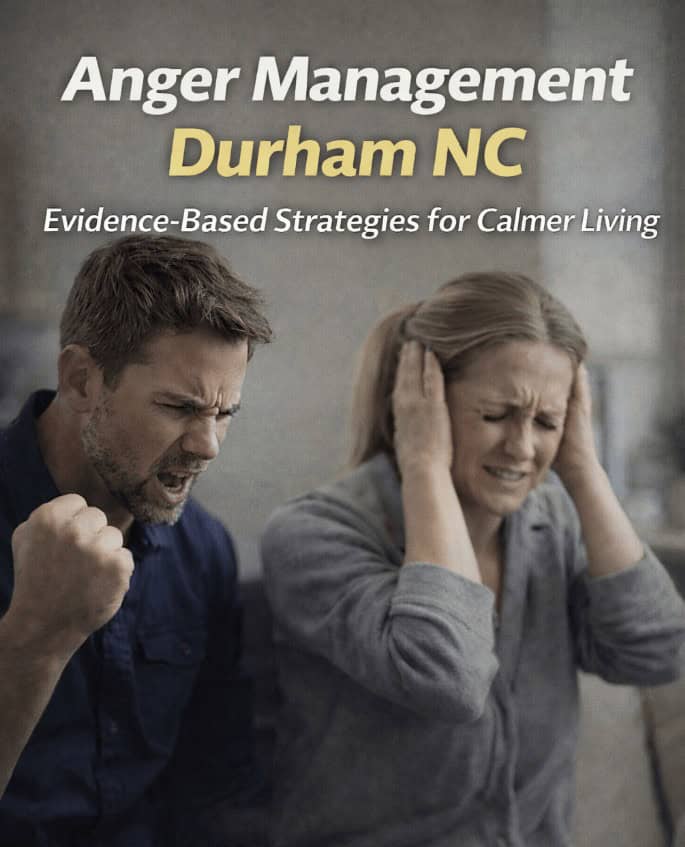
Anger Management Durham NC: Evidence‑Based Strategies for Calmer Living
Feeling overwhelmed by anger—snapping at loved ones, clenching your jaw, or regretting outbursts afterward—is more common than many people admit. Anger management Durham NC services at Greene Psychology Group offer compassionate, evidence‑based coping strategies so you can express frustration more safely, protect important relationships, and regain a sense of calm.pmc.ncbi.nlm.nih+1
Licensed psychologists and mental health clinicians at Greene Psychology Group use cognitive‑behavioral and trauma‑informed approaches, adjusted for individuals, couples, and families. Whether you are in Durham, Raleigh, Cary, or surrounding Triangle communities, their in‑person and online therapy options make support easier to access.
If anger is impacting your home, work, or health, you are not alone—and help is available. Call (919‑205‑5339) or use the contact page to schedule a free consultation and explore anger management Durham NC options that match your needs.
What Is Anger Management Therapy?
Anger management therapy is a structured form of psychotherapy designed to help you understand, regulate, and redirect intense emotions in healthier ways. Rather than trying to eliminate anger, this approach teaches you how to recognize early warning signs, pause before reacting, and choose responses that protect relationships and your own well‑being.apa+1
Key goals of anger management therapy include:
- Identifying triggers that spark intense reactions (criticism, feeling ignored, traffic, disappointment, etc.).
- Learning relaxation and grounding skills to calm your body in the moment.library.samhsa+1
- Replacing automatic outbursts with deliberate, assertive communication rather than aggression or shutdown.thenewhopemhcs+1
Greene Psychology Group adapts these principles to you as a person or a family system, blending them with their broader expertise in cognitive‑behavioral therapy (CBT) and relationship‑oriented treatment.
Why Anger Management Therapy Works: Evidence Behind the Approach
Anger is a normal human emotion, but when it becomes frequent, intense, or out of proportion, it can harm your health, relationships, and sense of self. Respected mental health organizations such as the American Psychological Association (APA) and National Institute of Mental Health (NIMH) highlight standardized approaches—including cognitive‑behavioral techniques—for managing anger‑related problems.nimh.nih+1
What the research shows:
- Cognitive‑behavioral methods help people identify and change unhelpful thinking patterns that fuel angry reactions (for example, “They never listen to me” vs a more measured “Sometimes we misunderstand each other”).pmc.ncbi.nlm.nih+2
- Studies show that CBT‑based anger interventions can reduce anger‑related feelings and aggressive behaviors, especially when paired with mindfulness or relaxation training.pmc.ncbi.nlm.nih+1
- Anger management programs often follow structured modules: identifying triggers, learning regulation skills, and practicing communication or problem‑solving.
Greene Psychology Group’s anger management work aligns with this evidence‑based framework while staying flexible enough to meet cultural, developmental, and trauma history needs in Durham and the broader Triangle
When Is Anger Management Therapy Right for You?
Anger management therapy is not only for people who are “about to lose it” or involved in frequent conflicts. It can help anyone who wants to:
- Reduce the intensity of outbursts and the physical effects of anger (tense muscles, racing heart, headaches).
- Protect important relationships with partners, children, coworkers, or friends when emotions run hot.bullcitypsychotherapy+1
- Develop better tools for handling stress, frustration, or transitions without irritation building up into explosions.
Common situations where anger management therapy can be especially helpful include:
- Intense arguments with a partner that leave you feeling guilty or distant afterward
- Frequent outbursts directed at children or extended family members
- Feeling chronically irritated at work or in traffic even when nothing dramatic is happening
- A history of trauma or substance use where anger masks underlying pain
If any of these resonate with you, the strength is in seeking help, not in “being broken.” Greene Psychology Group’s clinicians are trained to talk about anger without shaming and to see your reactions as understandable responses that can be reshaped over time.[apa]
How Does Anger Management Therapy Work? Session by Session
Anger management therapy at Greene Psychology Group can be delivered through individual sessions, couple or family therapy, or occasionally group‑style formats, all depending on what best fits your goals.
A Typical Structure for Anger Management Sessions
- Assessment and goal‑setting
Your therapist starts by understanding what anger looks like for you: how often it occurs, what triggers it, how you have tried to manage it, and how it affects relationships or work. Together, you set concrete, achievable goals such as “postpone responding when frustrated,” “use time‑outs after work,” or “speak calmly with my teen about grades.” - Identifying triggers and early signs
You work on noticing early warning cues, both physical (clenched jaw, raised voice, faster heartbeat) and mental (catastrophic thoughts like “They’re trying to control me!”). Mapping these out in simple charts or worksheets helps you catch anger before it escalates. - Learning coping tools and “timeout” skills
Skills often covered include:- Deep breathing and grounding techniques
- Planned “timeouts” or space‑taking to pause before reacting
- Thought‑challenging strategies (e.g., asking, “What is actually happening vs my worst‑case story?”)
- Practicing healthier communication
With guidance, you may practice assertive expressions such as “I feel upset when…” rather than “You always…” This shift can significantly reduce conflict and feelings of unfairness for everyone involved.thenewhopemhcs+1 - Integrating with broader treatment when needed
If anger overlaps with anxiety, depression, PTSD‑related symptoms, or substance‑use concerns, your clinician may integrate additional CBT or trauma‑informed elements to address the bigger picture.
Sessions are usually 45–60 minutes, and may progress weekly or biweekly, adjusted to your life rhythm and treatment goals.
Worksheets and Tables: Simple Anger Management Tools
Here are two gentle, educational tools you can use to understand anger without intending them as formal therapy or diagnosis. Greene Psychology Group clinicians often use similar patterns in session and then tailor them to your unique life.
Anger Trigger vs Response Table (Example)
| Situation/Trigger (What Happened?) | Automatic Thought (Inner Comment) | Feeling Intensity (1–5) | Typical Reaction | Healthier Response to Try |
| Partner asks for a favor after long work day | “They never consider how tired I am” (assumption) | 4–5 | Snaps, slams door | Pause, take a breath, say: “I’m wiped; give me 5 minutes, then I’ll help.” |
| Teen comes home late without texting | “They don’t care about my rules” | 4 | Yells, threatens | Ask for explanation calmly; discuss expectations without immediate criticism. |
| Boss criticizes a report | “I’m fundamentally incompetent” | 5 | Withdraws or argues | Ask clarifying questions, then process privately afterward without reacting in the moment. |
By filling in a few rows like this in a journal or worksheet, you begin to see your anger chains and practice new responses with your therapist’s support.
Evidence‑Based Anger Management Techniques
Greene Psychology Group’s anger management work reflects several well‑supported approaches:
- Identifying and tracking triggers
Noticing what situations, people, or times of day tend to spark irritability helps you plan healthier responses in advance. - Relaxation and grounding before reacting
Deep breathing, brief mindfulness, or planned “timeout” techniques can reduce the intensity of anger in the body and create space between impulse and action. - Cognitive restructuring (CBT)
This involves:- Spotting automatic negative or “inflammatory” thoughts (“They’re out to ruin my day”).
- Testing those thoughts against evidence.
- Choosing more balanced perspectives (“They may be stressed too”).
- Assertive communication practice
Instead of escalating, suppressing, or exploding, you learn to state your needs clearly and quietly, such as:- “I need a moment to cool off; we can talk in 10 minutes.”
- “When X happens, I feel Y—can we figure out a solution together?”thenewhopemhcs+1
- Problem‑solving and prevention skills
Anger often builds because unmet needs pile up silently. Structured problem‑solving helps you address those needs proactively instead of letting resentment grow.
No single technique guarantees success for everyone, but research consistently shows that people who practice these skills in therapy often report fewer outbursts, better relationships, and greater self‑control over time.
How Many Anger Management Sessions Are Typically Needed?
There is no strict rule, but research‑supported anger management programs often run in structured modules of 8–12 weekly sessions. Some people see enough change in fewer sessions, especially when they commit to practicing skills daily; others benefit from ongoing work if anger is connected to complex trauma or long‑standing family patterns.
What affects the number of sessions?
- Severity and frequency of angry reactions
- Co‑occurring concerns (anxiety, depression, trauma, substance use, relationship conflicts)
- Consistency with at‑home practice (using “timeout” rules, journaling, communication exercises)
During your first visit with Greene Psychology Group, your clinician will review your situation, explain what a realistic timeline might look like, and then adjust based on your progress—without promises of “full cure” but with hope for meaningful change.
Is Anger Management Therapy Safe and Appropriate for Kids?
Yes. Anger and conduct‑related difficulties are common childhood challenges, and cognitive‑behavioral anger‑management approaches are among the best‑supported treatments for children and adolescents. Rather than labeling a child as “bad” or “uncontrollable,” therapists help families understand emotional regulation skills as tools that can be learned.
In practice, this often includes:
- Teaching anger‑detection skills (how bodies and minds signal anger)
- Using stories, games, and simple visual charts so concepts are more engaging for younger ages
- Involving parents or caregivers to maintain consistent rules and reinforcement at home
Greene Psychology Group’s clinicians have experience working with children, teens, and families; in family‑therapy settings, they may address parent–child conflicts, school‑related behavior problems, or sibling rivalry through an anger‑management lens. For each child, they start by meeting developmental level and comfort, never pushing harder than the child (and family) can handle.
Timing, Practice, and When to Start Anger Management
“Waiting until things are completely broken” is common but usually more painful than starting earlier. It often helps to reach out when:
- You frequently feel regret or shame after arguing or yelling.
- Loved ones have expressed concern about your temper.
- Fights are starting to impact work performance, friendships, or court involvement (even informally).
You do not need to be “in crisis” to benefit from anger management. Many people seek help proactively—before a relationship reaches a breaking point, before a school incident, or simply when they can sense that frustration is building.
Anger management therapy timing also includes how often sessions occur and how you practice in between:
- Weekly or biweekly sessions are common for active skill‑building.
- Your clinician may invite you to practice “mini timeouts” or thought‑labeling during daily situations and then review what worked and what needs tweaking.
Greene Psychology Group emphasizes gradual, sustainable change, not overnight transformations, and will work with you at whatever pace feels realistic given school, job, and caregiving responsibilities.
Costs, Insurance, and Access to Anger Management Durham NC
Many anger management courses and therapists are trained, but quality, evidence‑based work matters. Costs depend on several factors:
- Whether you attend individual, family, online, or group sessions
- Your insurance coverage (copays, deductibles, in‑network vs out‑of‑network)
- Any self‑pay or sliding‑scale options the practice offers
Greene Psychology Group can help explain:
- What your insurance might cover for anger management therapy or related services
- Any out‑of‑pocket estimates and scheduling options
- The availability of online therapy as a convenient alternative to in‑person visits in Durham, Raleigh, or Cary
For clear, practical answers about cost and access, you can call (919‑205‑5339) or use the contact page to share your questions directly with the office.
Is Online Anger Management Therapy Effective?
Teletherapy, including virtual anger management sessions, has become a well‑supported option for many adults and families. Research suggests that online therapy can be at least as effective as in‑person treatment when delivered by licensed professionals using secure video platforms, particularly for talk‑based and CBT‑style approaches.
Benefits of online anger management therapy include:
- Easier access across Durham, Raleigh, Cary, and the broader Triangle, including people with limited transportation or mobility
- The comfort of practicing new skills in your own environment (for example, pausing during an argument at home without rushing from the car)
- Flexibility to fit sessions into busy work or family schedulesuclahealth+1
Greene Psychology Group’s online therapy platform uses encrypted connections and complies with HIPAA privacy standards, so your discussions remain confidential and secure.
If you are wondering whether “virtual sessions” are right for anger work, your clinician can help you decide what format would work best for you and your family.
What Should You Expect Before, During, and After Anger Management Therapy?
Before a First Session
Before starting anger management therapy, you are not expected to arrive perfectly self‑aware or calm. Helpful first‑step actions include:
- Calling (919‑205‑5339) or filling out the contact form to request an appointment or free consultation.[yelp]
- Thinking about one or two specific situations where anger feels out of control so you have a concrete starting point to discuss.
- Deciding whether you would prefer individual, couple, or family therapy (or if unsure, letting the clinician help you choose).
Your therapist’s main task before and during the first meeting is to reduce shame, increase safety, and clarify what to expect—not to surprise or confront you.
During Anger Management Work
During sessions, you may:
- Notice your anger patterns becoming clearer through discussion and tracking sheets.
- Feel nervous at first sending honesty like “I yelled at my partner again,” only to be met with calm, non‑judgmental questions and practical tools.
- Gradually shift from “They made me angry” to “Here is what happened, and here is one small choice I can make differently next time.”
Progress is often non‑linear; some weeks will feel hopeful and other weeks may feel like setbacks. Anger management is about learning skills you can return to, not about being perfectly calm forever.
After Therapy: Maintaining Calmer Responses
Even after formal anger management work ends, you can:
- Use simple tools (like the trigger‑response table or breathing exercises) when tension rises.
- Revisit strategies during high‑stress times (job changes, family events, anniversaries of loss or trauma).
- Reach back in for check‑in or booster sessions if anger flares up again in new life phases.
Greene Psychology Group emphasizes that “your journey to wellness” includes both learning and occasional re‑learning—this is normal and not a sign of failure.
Frequently Asked Questions About Anger Management in Durham NC
Anger management therapy is a structured, evidence‑based form of psychotherapy that helps you understand why you get angry, notice early warning signs, and choose healthier responses—instead of just trying to suppress or “tough it out.” It uses tools from cognitive‑behavioral therapy, relaxation training, and communication skills, so you can protect relationships and your own well‑being without feeling ashamed of normal human emotions
Anger management is right for anyone who:
-
Feels their outbursts are too intense or frequent,
-
Regrets words or actions after arguments, or
-
Notices anger affecting work, health, or relationships.
It is not only for “explosive” episodes; it can help if you’re chronically irritated, easily triggered, or using anger to mask stress, anxiety, or unresolved pain.
Yes. Anger and conduct‑related struggles are common in childhood and adolescence. Evidence‑based anger‑management programs for kids and teens focus on teaching emotion‑detection, self‑calming skills, and assertive communication through age‑appropriate tools like games, stories, and charts. Greene Psychology Group involves families so rules and supports stay consistent at home and school.
Structural programs often run 8–12 weekly sessions, but some people see noticeable change sooner, especially if they practice skills daily. Others benefit from longer‑term work if anger is connected to trauma, family patterns, or co‑occurring depression or anxiety. At Greene Psychology Group, your clinician will review your situation and give a realistic timeline, adjusted over time rather than promising a “quick fix.”
Sessions usually last 45–60 minutes and may be individual, couple, family, or group‑style. Common steps include:
-
Talking about recent anger‑triggering events.
-
Using worksheets or charts to track triggers, thoughts, and reactions.
-
Practicing coping skills like breathing, thought‑challenging, and assertive phrasing.
-
Planning how to apply these skills in daily life before the next session.