
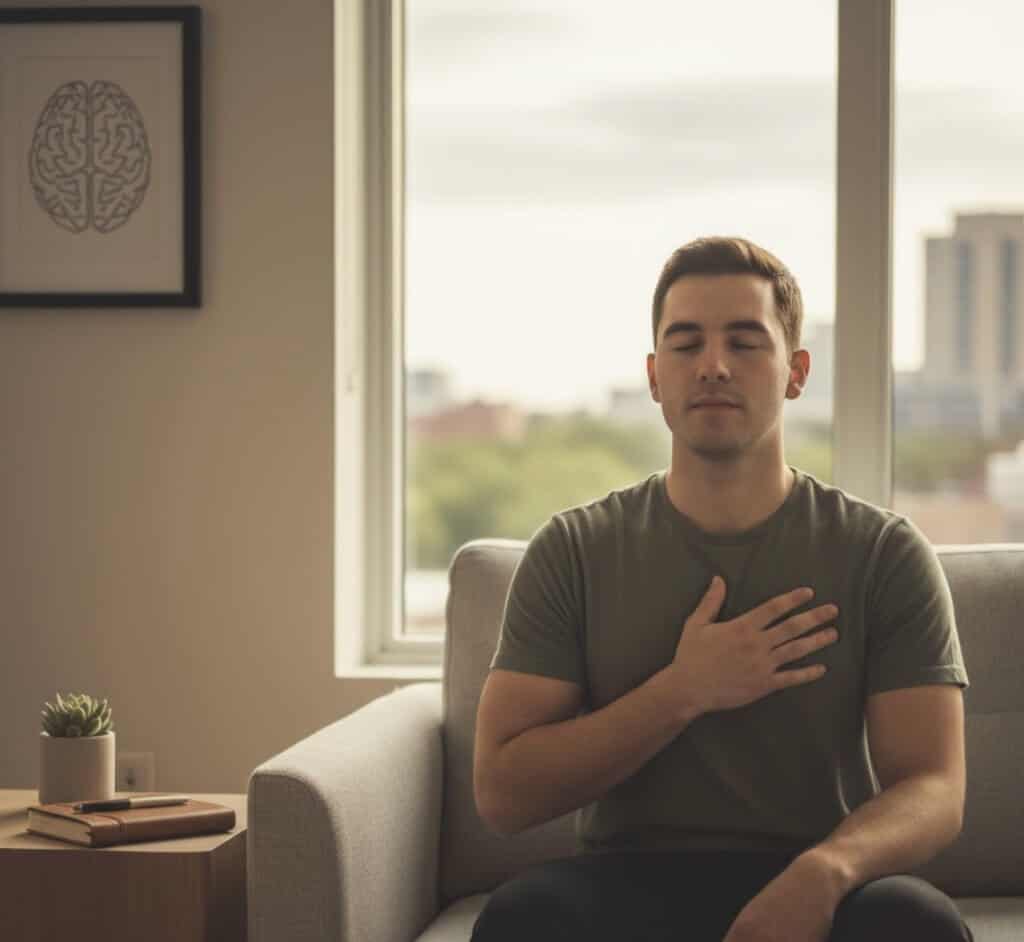
If anxiety has started calling the shots—declining plans you wanted to accept, rereading emails until your eyes blur, skipping workouts because your heart feels “too fast”—you’re not alone. Anxiety disorders are the most common mental health conditions in the U.S., affecting tens of millions of adults each year. Evidence‑based care works, and it’s available locally. This guide explains what anxiety therapy looks like in practice, how exposure and CBT reduce symptoms, and how to start with anxiety therapy Raleigh in a way that fits your schedule and preferences. (National Institute of Mental Health)
Quick reminder for safety: If you’re in crisis, call 988 (Suicide & Crisis Lifeline) or 911. Services may vary by program; verify local options before relying on any single resource.
Why anxiety therapy works: what the science says
Across anxiety presentations—generalized anxiety, panic, social anxiety, and phobias—structured psychological treatments consistently help. Large reviews and guidelines converge on a straightforward point: cognitive behavioral therapy (CBT) and exposure‑based methods are first‑line approaches for adults, with the best evidence for durable results. A 2023 network meta‑analysis in JAMA Psychiatry found CBT produced both short‑term improvement and long‑term effectiveness for generalized anxiety disorder (GAD); “third‑wave” CBTs (e.g., ACT, mindfulness‑based CBT) also helped, especially short‑term. (JAMA Network)
For panic and GAD specifically, physician guidance (AAFP) synthesizing multiple trials recommends CBT and related therapies; medications can be appropriate, but benzodiazepines are not first‑line and should be used cautiously. NICE guidance likewise prioritizes stepped psychological care, starting with high‑intensity CBT for persistent symptoms. (American Academy of Family Physicians)
Exposure therapy—progressively approaching feared situations, sensations, or memories—remains a core engine of change across fear‑based problems, including panic, social anxiety, phobias, OCD, and PTSD. When exposure is woven into anxiety therapy, clients learn (by experience) that feared outcomes are less likely, more survivable, or more controllable than the anxious mind predicts. (American Psychological Association)
Anxiety therapy Raleigh: what treatment actually looks like
Anxiety therapy Raleigh is not endless talk. It’s a structured collaboration with clear goals, skills practice, and measured progress. At Greene Psychology Group you can work in person or through online therapy with local, licensed clinicians who provide CBT‑informed care. Sessions focus on practical steps that translate to your day‑to‑day life (work, school, parenting, social plans). (Greene Psychology Group)
A typical course of anxiety therapy includes:
- Assessment & plan. You’ll map triggers, safety behaviors (the subtle “get me out of here” maneuvers that keep anxiety stuck), and priorities.
- Skills + experiments. You’ll use cognitive tools to test anxious predictions, then conduct real‑world “approach” experiments (exposure).
- Interoceptive work. For panic, you may practice gentle exposure to internal sensations (e.g., brief cardio bursts to simulate a racing heart) until those sensations feel less alarming. (American Psychological Association)
- Relapse prevention. You’ll design a “maintain the gains” plan that keeps progress going when routines wobble.
Greene clinicians offer therapy in Raleigh with a CBT foundation—augmented by mindfulness strategies and skills coaching when helpful. (Greene Psychology Group)
The approach‑avoidance cycle (and how therapy breaks it)
Avoidance is anxiety’s favorite fertilizer. It brings immediate relief but teaches your brain, “that situation is dangerous.” Over time, your world shrinks. Anxiety therapy reverses the loop:
- Identify the specific situations, thoughts, or sensations you avoid.
- Start with graded exposure—small, repeatable steps toward feared contexts.
- Stay long enough for discomfort to peak and then decline (habituation) or for new learning (“I can cope”) to stick.
- Repeat, widen, and generalize to the rest of your week.
This is the backbone of effective anxiety therapy Raleigh, and decades of research support it. (American Psychological Association)
What about online care?
Secure video sessions make it easier to follow through, especially with commuting or childcare constraints. Evidence suggests therapist‑supported internet‑delivered CBT can reduce anxiety symptoms and, in some cases, approximate outcomes from in‑person care—a useful option when paired with a licensed clinician. Greene provides online therapy to eligible North Carolina residents; clinicians practice where they’re licensed, and cross‑state care depends on state rules. (Cochrane)
Regulatory note: Telehealth across state lines is governed by licensure. Most clinicians may only treat clients who are physically located in states where the clinician holds a license. Confirm your location at the time of each telehealth session. (telehealth.hhs.gov)
Which therapy style fits which anxiety pattern?
- GAD (constant worry, restlessness). Standard CBT targets unhelpful beliefs about worry and intolerance of uncertainty; relaxation and “third‑wave” methods (e.g., ACT) often complement core CBT. Recent reviews favor CBT as the first‑line psychological treatment with the best long‑term data. (JAMA Network)
- Panic attacks (with/without agoraphobia). Interoceptive exposure + cognitive work to reduce catastrophic misinterpretations (“a fast heartbeat means danger”). Authoritative guidelines support CBT protocols for panic. (American Academy of Family Physicians)
- Social anxiety. In‑session and real‑world exposure (e.g., initiating conversations, giving brief toasts, embracing a “blush and stay” experiment) reduces avoidance and fear of judgment. (American Psychological Association)
- Specific phobias. Brief, focused exposure blocks can produce outsized gains—often in just a handful of sessions. (American Psychological Association)
When a medical condition, substance use, sleep disorder, or trauma history contributes to symptoms, clinicians coordinate care and adjust the plan. For many adults, anxiety therapy alone is enough; for others, combined care with a prescriber is useful. As AAFP notes, benzodiazepines are not first‑line for chronic anxiety disorders. (American Academy of Family Physicians)
What results to expect (and when)
Most clients notice early changes in the first 3–6 sessions—fewer avoidance rituals, more confidence during exposures, and improved sleep. Gains compound across 8–12 sessions. A network meta‑analysis found that CBT for GAD maintained superiority at 3–12 months post‑treatment compared with usual care, supporting the emphasis on skills that last beyond weekly sessions. (JAMA Network)
Older adults benefit too, though some trials historically underrepresented people 55+. A recent review focused on older adults still found CBT helpful, suggesting anxiety therapy should be offered across the lifespan with age‑appropriate pacing. (American Academy of Family Physicians)
Practical tactics you’ll actually use this month
- Worry windows. Schedule two 10‑minute “worry appointments” daily; postpone intrusive worries until the window. This trains selective attention.
- Values‑first calendar. Place one small, values‑aligned activity per weekday (text a friend, apply for one role, walk 15 minutes). Action shrinks the role of anxious predictions.
- Micro‑exposures. Start with 60‑second tasks that nudge discomfort: one elevator ride, one phone call, one brief meeting contribution. Log heart rate and “threat” predictions before/after.
- Caffeine and sleep. Limit late‑day caffeine; build a 30‑minute wind‑down. (Lifestyle is supportive, not curative—therapy remains the primary lever.) (American Academy of Family Physicians)
For Raleigh‑specific support, you can work with a local clinician in person or via therapy in Raleigh and online therapy. (Greene Psychology Group)
How to start anxiety therapy Raleigh with Greene Psychology Group
- Scan fit. Review the practice, specialties, and values on Greene’s homepage and About Us. (Greene Psychology Group)
- Choose your format. In person or secure video (North Carolina residents). (Greene Psychology Group)
- Book a first session. Use the contact form to request times, confirm insurance, and ask about initial frequency (often weekly to start). (Greene Psychology Group)
- Set two goals. Examples: deliver one meeting update this week; attend a social event for 45 minutes without leaving early.
- Track the data. Short daily logs show progress faster than memory does.
As your plan evolves, clinicians can integrate targeted work on stress and anger management when these interact with anxiety—common and very workable combinations. (Greene Psychology Group)
Local + ethical + compliant
- Privacy & HIPAA: Greene uses secure processes for telehealth; you’ll join from a private location and clinicians conduct sessions in private clinical spaces. (Greene Psychology Group)
- Licensure reality: Clinicians can only provide telehealth to clients physically located in states where they hold a license; cross‑state treatment depends on state rules and compacts. Confirm your location each session. (telehealth.hhs.gov)
- Medical caution: This article is educational and not a diagnosis or treatment plan.
FAQs
Q1. What is the fastest‑working form of anxiety therapy?
CBT with exposure is the most consistently supported approach across adult anxiety disorders, with the best evidence for lasting results after treatment ends. (JAMA Network)
Q2. Does anxiety therapy help if medication hasn’t?
Yes. For many adults, structured anxiety therapy improves functioning even after limited medication benefit. Guidelines still emphasize CBT first‑line; medications can be adjuncts. (American Academy of Family Physicians)
Q3. How many sessions will I need?
Varies by presentation and goals. Many clients see meaningful change within 8–12 sessions, with continued gains as exposures expand into daily life. (JAMA Network)
Q4. Can I do anxiety therapy through telehealth if I’m in North Carolina?
Yes, if your clinician is licensed in NC and you’re physically in NC at session time. Cross‑state telehealth depends on state rules. (telehealth.hhs.gov)
Q5. Will therapy make me face my worst fear immediately?
No. Exposure is graded and collaborative. You’ll start with manageable steps and progress as your confidence grows. (American Psychological Association)
Q6. Are benzodiazepines recommended for chronic anxiety?
Not as first‑line. AAFP/NICE summarize that benzodiazepines are not more effective than antidepressants for most anxiety disorders and carry risks. (American Academy of Family Physicians)
Q7. What if I’m 60+—does CBT still help?
Yes. Recent evidence suggests CBT benefits older adults as well, with pacing tailored to health and learning preferences. (American Academy of Family Physicians)
Q8. What’s the difference between CBT and “third‑wave” CBT?
Third‑wave approaches (e.g., ACT, mindfulness‑based CBT) emphasize acceptance and values‑based action. They show short‑term benefits, while classic CBT has the strongest long‑term data for GAD. (JAMA Network)
Sources
- NIMH overview and prevalence of anxiety disorders. (National Institute of Mental Health)
- NICE guideline for GAD/panic (stepped psychological care). (NICE)
- JAMA Psychiatry network meta‑analysis: psychotherapies for GAD (CBT long‑term effectiveness; third‑wave CBTs). (JAMA Network)
- European Psychiatry network meta‑analysis corroborating psychotherapy comparisons. (Cambridge University Press & Assessment)
- AAFP clinical synthesis for GAD/panic (CBT; benzodiazepines not first‑line). (American Academy of Family Physicians)
- APA explainer on exposure therapy; clinical review on exposure across anxiety conditions. (American Psychological Association)
- Cochrane review on therapist‑supported internet CBT for adults with anxiety. (Cochrane)
- HHS telehealth licensure across state lines (regulatory note). (telehealth.hhs.gov)
- Greene Psychology Group site pages for service details and telehealth privacy notes. (Greene Psychology Group)