
Greene Psychology Group · North Carolina teletherapy
Online Therapy in North Carolina
Real conversations. A setting that works for your life. Meet with a Greene Psychology Group therapist by live video to work through anxiety, depression, stress, and life's difficult transitions.
Our team offers online counseling to eligible clients located in North Carolina at the time of their visit. We'll help you understand the next steps, discuss your goals, and match your needs with an available clinician whose services are a fit.
Raleigh and Asheville offices · Video visits for eligible clients across North Carolina · Insurance and self-pay options
The short answer
What is online therapy?
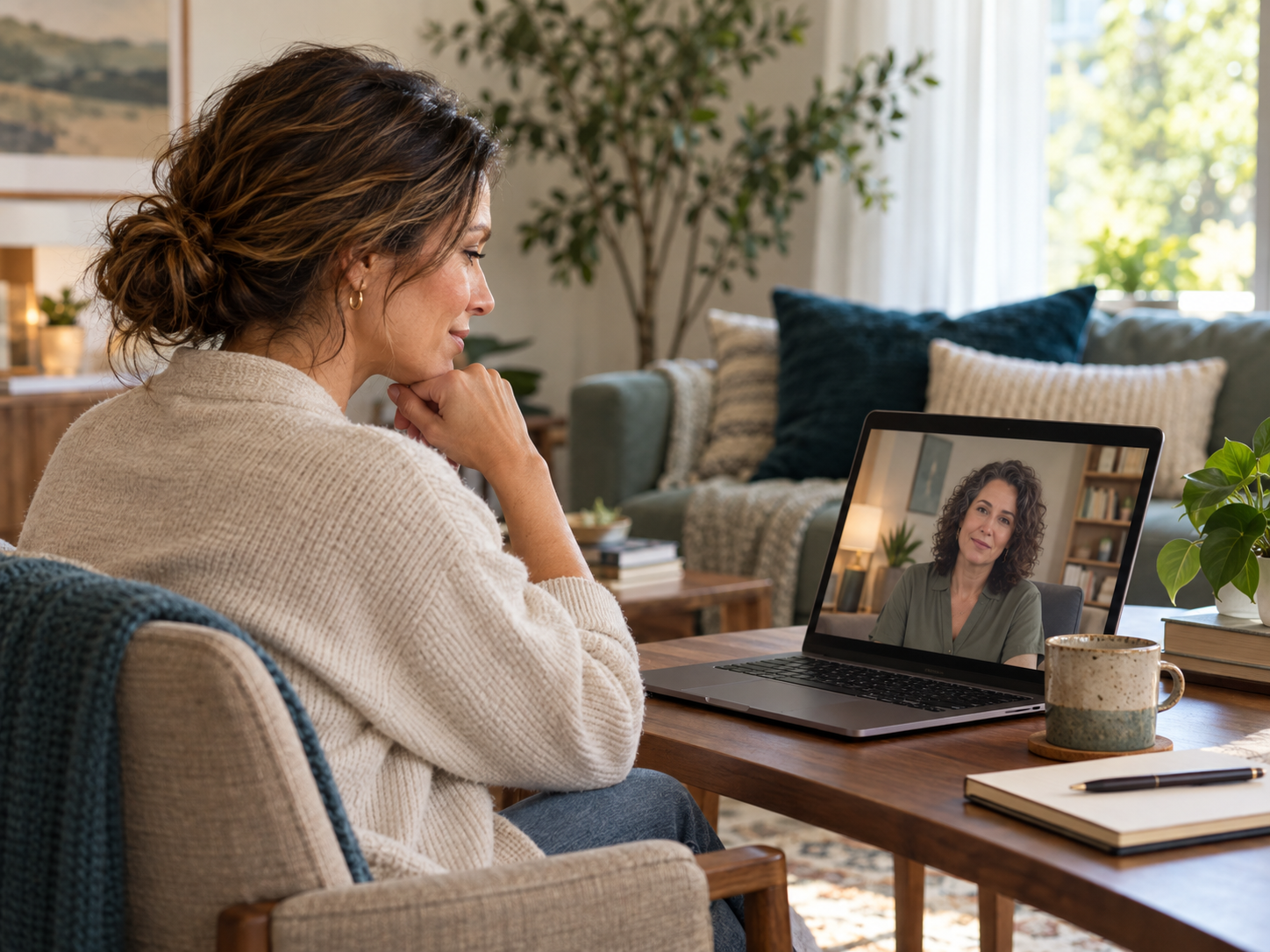
Online therapy is psychotherapy conducted through a live video visit. You and your therapist meet at a scheduled time, talk in real time, and work toward the goals you establish together. The format changes where you meet; it does not make your concerns less important or turn therapy into a one-size-fits-all app.
At Greene Psychology Group, the first step is a conversation about what brings you to therapy and what you hope will change. Your clinician may explore current symptoms, relevant history, relationships, coping patterns, and strengths. From there, the work may involve reflection, practical skills, and a plan that can evolve as your needs change.
Online therapy can make ongoing care more practical if travel, a demanding schedule, mobility, distance from an office, or family responsibilities make an in-person visit difficult. You still need a private place to talk, a working device, and a reliable connection. If video is not a good fit for your situation, the team can discuss other available options.
At a glance
Can I attend from my home?
Often, yes. A quiet room where you can speak freely is a good starting point. The practice will confirm eligibility, location, and the right type of appointment before scheduling.
Do I need to live in Raleigh?
No. The practice describes online care for people throughout North Carolina. What matters for a particular appointment is where you are physically located, the clinician's ability to serve you there, and clinical fit.
How do I begin?
Contact the practice, tell the team that you want an online visit, and ask about clinician availability, payment, and the steps for a first appointment.
Ask about availabilityCare designed around real life
Why people choose online counseling
You may want to talk with a therapist and still find that getting to an office feels like one more task in an already demanding week. Video sessions can lower that practical barrier while keeping the human relationship at the center of care. Convenience, however, is only one part of the decision: comfort, privacy, therapeutic fit, and the type of support you need matter just as much.
Less time in transit
Without a drive to and from the office, it may be easier to make room for a recurring appointment. You can plan your day around the session instead of planning your entire day around a commute.
More location flexibility
When you are eligible for a North Carolina video visit, you may attend from an appropriate private space at home or another suitable location. A consistent, quiet setting can help you settle into the conversation.
Continuity that supports the work
Therapy often depends on returning to important topics over time. A format you can realistically attend may make it easier to stay engaged and apply what you discuss between sessions.
A video visit is still a clinical appointment. It is appropriate to ask how the platform works, how communication is handled, what to do if you lose the connection, and when an in-person visit or another level of care would serve you better.
What brings people here
Concerns you can discuss in online therapy
People do not need to arrive with a diagnosis or a perfectly worded explanation. You might know exactly what you want to address, or simply notice that daily life feels harder than it used to. The first appointment is a chance to explain what is happening in your own words and decide together what would be useful.
Anxiety and persistent worry. Maybe your mind cycles through worst-case scenarios, you avoid situations that matter to you, or tension makes it difficult to rest. Therapy can help you examine patterns and practice ways to respond. Learn more about the practice's anxiety services.
Depression and low motivation. Feeling flat, disconnected, exhausted, or less interested in familiar activities can affect work and relationships. Your therapist can help you explore symptoms and meaningful steps forward. Read about depression therapy.
Stress and life changes. Career pressure, caregiving, a move, changes in routine, grief, or an unexpected setback can leave little room to process what you need. Sessions provide dedicated time to understand the pressure and consider what you can influence.
Relationship difficulties. Conflict, boundaries, communication, or changes in a family relationship can be discussed in individual therapy. If you are seeking a shared session with a partner or family member, ask which relationship counseling services are currently offered by video and whether that format is suitable.
Patterns you want to change. Some people come to therapy because they repeatedly respond in ways that do not match their values. Others want support building self-understanding, confidence, emotional regulation, or healthier habits. A therapist can help turn a broad intention into workable goals.
Skills-based work. Depending on your clinician and your needs, your care may include approaches such as cognitive behavioral therapy (CBT). CBT often examines the links among thoughts, feelings, and behavior and includes practical strategies to try between visits. The method and pace should fit the person.
Tell the practice what you are experiencing and what you want help with. The team can explain available clinicians and appointment options without asking you to diagnose yourself.
A clear path forward
What to expect from your first online therapy session
A first visit is an introduction to the person and the process. You can expect questions, but you do not have to explain your entire life in perfect order. Your clinician needs enough context to understand what brings you in, assess whether this format is appropriate, and start identifying goals together.
Before the visit, the practice may ask you to complete intake paperwork, provide contact and insurance information, and review consent or telehealth policies. Confirm the appointment instructions and the technology you will use. If you have a question about privacy, a payment estimate, or the best place to take the call, ask before the session.
At the start of a video appointment, a clinician may confirm your identity, where you are physically located, and how to reconnect if the call drops. These details help them respond appropriately if a technical or safety problem occurs. They may also explain confidentiality and its limits so you know what to expect.
The conversation itself can cover the difficulties you are facing, what has helped before, what has not, and the changes you would like to see. It is reasonable to ask about the therapist's approach, experience with your concerns, session frequency, and how you will know whether the work is helping.
Reach out
Use the contact page or call the office. Say that you are interested in an online appointment and share a short description of what you want help with.
Confirm the fit
Ask which clinicians are taking clients, whether your location and needs qualify for a video visit, and what your insurance or self-pay arrangement may involve.
Prepare your space
Find a private location, charge your device, check sound and internet access, and follow the practice's instructions for joining your visit.
Meet your therapist
Discuss your concerns and decide on useful next steps together. You can raise questions about the format and ask to revisit the plan as therapy progresses.
Think about one or two things you want your therapist to understand and one small change that would make life feel more manageable. Notes are optional; there is no test to pass.
Choosing the right setting
Is virtual therapy right for you?
Online sessions can be a strong option for many forms of talk therapy, but the right setting depends on the person and the situation. Your clinician may recommend a different format or additional support if a video visit cannot safely or effectively meet your needs. The practice also offers in-person services; ask about current options and availability.
- You can take the call from a private place without being overheard.
- You have a device and connection that let you see and hear the clinician reliably.
- You prefer to avoid travel or need more flexibility for ongoing appointments.
- You want individual talk therapy and your needs are suitable for remote care.
- You are physically in a location where your assigned clinician can provide the session.
- You cannot speak safely or privately where you would join the visit.
- Connection problems regularly interrupt important conversations.
- You would feel more comfortable meeting face to face.
- A child's developmental needs call for a different format or approach.
- Your symptoms or immediate safety needs require more direct or urgent support.
Some people begin in person and later discuss video sessions; others may ask about changing formats as their needs evolve. Whether that is available depends on the clinician, the service, and scheduling. Explore the general therapy page if you are comparing care options in Raleigh.
If you or someone else is in immediate danger, call 911 or go to the nearest emergency department. For emotional distress or suicidal crisis in the United States, call or text 988. An appointment request is not an emergency response service.
The person behind the screen matters
Work with a Greene Psychology Group clinician
Good therapy depends on understanding the whole person. A useful treatment plan considers your circumstances, preferences, strengths, symptoms, and the kind of change you are seeking. Video is the way you meet; your therapeutic relationship and the quality of the work still matter.
Greene Psychology Group lists licensed psychologists, counselors, and social workers on its team page. Their backgrounds and clinical interests differ. When you contact the practice, explain any preferences or questions you have about a clinician's experience, therapeutic style, age group served, or availability for video visits. The practice can tell you which team members currently offer the service you need.
For example, a clinician may help you notice how worry affects a decision, identify an unhelpful pattern, or develop a practical response you can test in daily life. Another session may focus more on understanding grief, relationships, or a difficult transition. These are examples of therapeutic work, not a promise that one technique will fit every person.
It is also normal to assess the fit as you go. You can ask what the goals are, why a particular approach is being recommended, how progress will be reviewed, and what to do if you feel stuck. A transparent conversation about these questions helps you participate actively in your care.
Questions worth asking
How do we decide what to work on first?
A shared starting point can make the early visits feel more focused, especially when several concerns overlap.
What might I practice between visits?
Some approaches involve reflection or new skills between sessions. Ask what is useful and realistic for your life.
How will we review progress?
Your goals can change. A periodic discussion of what is helping can keep therapy responsive.
What if the video format is difficult?
Discuss privacy, technology, or comfort concerns early so your clinician can consider alternatives with you.
Privacy and practical details
How to make an online session feel more private
Privacy involves the practice's technology and policies as well as the room where you join the appointment. Ask the team which video platform they use, how to access it, and how they protect your health information. Your clinician should also explain consent, the limits of confidentiality, and how to handle unexpected interruptions.
On your side, choose a room with a door when possible. If other people are nearby, headphones may help you hear privately, though they will not prevent others from hearing what you say. Consider a fan or white-noise source outside the door, and let your clinician know if you are concerned about being overheard.
Try to join from a stationary, safe location. A parked car may work for some people if it is sufficiently private and comfortable, but do not attend while driving. A café, workplace common area, or shared room may make it hard to speak openly. You can discuss limitations with the team before the appointment.
Test your camera, microphone, and connection shortly before the visit. Keep your device charged and, if practical, have a phone number available in case video disconnects. Ask in advance whether you should expect a link, portal invitation, or other instructions; follow the practice's actual onboarding process rather than an assumed platform.
Because care is remote, your clinician may ask where you are at the start of each session and discuss a contact plan for emergencies or a dropped call. This is especially relevant if you attend from different places. Tell the practice before traveling or joining from outside North Carolina so it can confirm whether the visit may occur.
Do not send detailed clinical history through a general web inquiry unless the practice directs you to a suitable channel. The site's contact form itself states that submitted information may pass through unencrypted email or electronic messaging. For sensitive details, ask the office how it would like you to provide them.
The U.S. Department of Health and Human Services offers patient guidance on telehealth privacy. The practice can answer questions about its specific procedures.
North Carolina access
Online therapy beyond Raleigh and Asheville
Greene Psychology Group has office locations in Raleigh and Asheville and describes video care for people in communities across North Carolina. An eligible client may be able to meet with a clinician while in Cary, Durham, Wake Forest, Charlotte, Greensboro, Wilmington, or another North Carolina community without traveling to an office. These cities are examples of the potential reach of teletherapy; they are not separate office locations.
The important detail is your physical location during the appointment. A North Carolina resident temporarily elsewhere should ask before joining a video visit; a person visiting North Carolina should also confirm eligibility. Professional licensing rules, the clinician's authorization, insurance terms, and clinical fit can affect what the practice can offer.
This page focuses on the experience of receiving care online throughout the state. For details about visiting an office, see the practice contact information. For a broader overview of treatment options, visit the therapy services page.
Before you schedule
Tell us where you'll be
Share the state where you expect to be physically located for appointments, especially if you travel regularly or split time between states.
Describe your priorities
A short description of your needs helps the team identify a suitable clinician and confirm that online care is an appropriate starting point.
Ask about availability
Appointment times and clinician openings change. The practice can confirm current options when you reach out.
Understand costs before starting
Insurance, self-pay, and online therapy
Paying for therapy can be confusing, especially when your plan distinguishes between in-network and out-of-network care. Greene Psychology Group's insurance and rates page says it accepts Blue Cross Blue Shield and Aetna and is in-network for most of those plans. It also describes self-pay and out-of-network options. Those statements are a starting point, not a guarantee that a particular clinician, service, or video visit will be covered under your plan.
Before scheduling, ask the practice which clinicians participate with your specific plan and whether your desired service is offered by video. Ask your insurer about telehealth mental health benefits, deductible, copay or coinsurance, authorization requirements, and whether the clinician is in-network. A plan's name alone may not tell the whole story.
If you plan to self-pay, request the current fee for the clinician and appointment length you are considering. If you are uninsured or choose not to use insurance, ask about a Good Faith Estimate and the practice's payment policy. The team can explain the steps that apply to you before your first visit.
Five useful questions for the office
- Which clinicians currently offer online appointments for my concern?
- Do you participate with my exact insurance plan for that clinician?
- What is the expected patient cost for an initial and a follow-up visit?
- What would I pay if I use out-of-network benefits or self-pay?
- How do I complete intake forms and receive my video link?
Answers before you reach out
Online therapy FAQs
Is online therapy the same as teletherapy?
In this context, yes. Both terms generally refer to meeting with a mental health clinician remotely, usually by live video. Greene Psychology Group's online therapy appointments are scheduled clinical visits. Ask the practice about the platform, appointment type, and communication process it currently uses.
Can I receive online therapy anywhere in North Carolina?
The practice describes teletherapy for eligible clients throughout North Carolina. Confirm your physical location during each visit, whether the clinician is authorized to provide your care there, and whether the service is clinically appropriate. Living near Raleigh or Asheville is not necessarily required for a video appointment.
Can I have a session while traveling outside North Carolina?
Do not assume that a session can proceed from another state or country. Tell the office where you will physically be before the appointment. The clinician's authorization, professional rules, clinical considerations, and coverage may affect whether the visit can take place.
Is online therapy effective for anxiety or depression?
Video-based psychotherapy can be an appropriate option for many people, including some seeking help for anxiety or depression. Outcomes vary with the person, clinician, approach, and circumstances. Your therapist can discuss whether remote treatment fits your needs and whether another format or additional care would be more useful.
What equipment do I need for a video session?
Typically you need a smartphone, tablet, or computer with a camera and microphone, an adequate internet connection, and a private space. Follow the practice's actual appointment instructions. Headphones can help with audio privacy, and a charged device reduces the risk of an interruption.
Will my insurance cover online therapy?
Coverage depends on your plan, the clinician, the type of visit, and your benefits. The practice lists Blue Cross Blue Shield and Aetna among plans it accepts, but participation and out-of-pocket costs need to be verified for your particular situation. Ask both the practice and your insurer before your visit.
How long does online therapy take to work?
There is no reliable session count that applies to everyone. Some people seek focused help with a short-term challenge; others need more sustained care. The nature of your concern, goals, attendance, treatment approach, and life circumstances all matter. You and your clinician can review progress and adjust the plan together.
Can teens or children use online therapy?
The practice describes services for adolescents and younger clients, but the right format and clinician depend on age, developmental needs, consent, the concern being addressed, and current availability. Ask the office which team members provide virtual care for the age group in question and whether an in-person approach might be preferable.
Are family or couples sessions available online?
The site describes family and relationship counseling, but not every type of session or clinician will necessarily be available by video. Ask whether the specific service you want is offered online, who should attend, where participants may join from, and how privacy is managed when multiple people are involved.
What should I do if I need help right now?
Online therapy appointments and web inquiries are not crisis services. If there is immediate danger, call 911 or go to the nearest emergency department. In the United States, call or text 988 for the Suicide & Crisis Lifeline. Do not wait for a routine appointment reply in an emergency.
Begin with a conversation
Make space for the support you need
You do not have to decide on a diagnosis, therapy method, or long-term plan before reaching out. Tell Greene Psychology Group that you are interested in online therapy in North Carolina, share what you hope to address, and ask about the next available appointment that fits your needs.
If you have trouble reaching the practice by phone, use its contact page for current contact instructions. Please keep detailed health information out of a general inquiry.
Further reading
HHS: Telehealth and behavioral health care · HHS: Planning for telebehavioral health emergencies · 988 Suicide & Crisis Lifeline
This page provides general information and does not establish a therapist–client relationship.